Showing posts with label eye doctor. Show all posts

Wednesday, February 28, 2018

CooperVision's MyDay: Newest Contact Lens Technology


CooperVision's MyDay: 
Newest Contact Lens Technology

We are excited to be carrying the new CooperVision MyDay lens, and here's why:

AT A GLANCE:

  • Convenient daily replacement schedule
  • Supports excellent all-day comfort
  • The healthier advantages of silicone hydrogel
  • Our highest UVA/UVB filters
  • Vision correction for nearsightedness and farsightedness
  • Available now for patients with astigmatism

CooperVision® MyDay lenses feature everything you need for an exceptional overall daily disposable experience: uncompromised all-day comfort, easy lens insertion and removal, and a highly breathable lens that helps provides a healthier1 lens-wearing experience. That’s MyDay—lenses you’ll put in and forget about until you’re ready to call it a day. 
Smart Silicone is a revolutionary breakthrough in lens chemistry that enables MyDay lenses to provide uncompromised comfort throughout your day. Smart Silicone™ delivers oxygen to your eyes much more efficiently than other daily disposable brands—while using less silicone. Here’s why that’s important: less silicone means there’s more room for moisture, making it a naturally water-friendly lens material . Less silicone also makes the MyDay lens exceedingly soft—softer than other silicone hydrogel daily disposable lenses.

Call our office for a contact lens evaluation to see if you are a good candidate for the new CooperVision MyDay lens!

Source: coopervision.com

Tuesday, October 17, 2017

Macular Degeneration


Macular Degeneration

“I have a family history of macular degeneration.  Is there anything I can do to help keep this from happening to me?”
Macular Degeneration is the leading cause of vision loss, affecting more than 10 million Americans, and at present is considered an incurable eye disease.
Macular Degeneration is caused by the deterioration of the central portion of the retina, the inside back layer of the eye that records the images we see and sends them via the optic nerve from the eye to the brain. The retina’s central portion, known as the macula, is responsible for focusing central vision in the eye, and it controls our ability to read, drive a car, recognize faces or colors, and see objects in fine detail.
Our diets include many processed foods that are lacking in the nutrients required to maximize macular pigment.  In addition, exposure to blue light from digital devices can contribute to macular disease and limit visual performance.
Recently a company has come out with a supplement that seems to be helping patients maintain a healthier macula.  Studies have shown that visual performance can be improved at any age following supplementation with a formulation that contains all three of macular pigment’s constituent nutrients.  MacuHealth with LMZ3 has been shown to appreciably improve visual performance and has also been shown to outperform alternative formulations.  We have started recommending this supplement to our at risk patients to help protect their macula from lifelong retinal injury, and reduce the risk of developing macular disease. 
We are now carrying this supplement in our office.  If you feel that you would like to try this, please call the office for an appointment with one of our eye doctors.

x

Monday, September 18, 2017

Eyewear Fashion - Fall 2017


Eyewear Fashion - Fall 2017

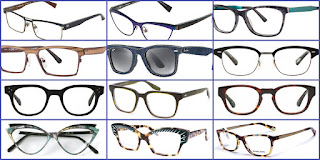
The buyers from our office just returned from Vision Expo West in Las Vegas, where some of the world's most fashionable eyewear designers unveiled their newest collections.  We fell in love with a few new lines that we will be bringing into our office and really noticed some new trends for the patient who likes to be fashion-forward!  (Stay tuned to our Facebook page over the next week as we unveil some new finds!)

TREND #1 - ROUND SHAPE


Round is vogue for eyewear and the person who wants to be wearing the latest trendy shape in fashion for eyeglasses and sunglasses will rush out and buy a pair of round specs!  The size ranges from the tiny "John Lennon" size round to the oversized movie-star glam.  We noticed round shapes made of classic tortoise, plated titanium in many colors, and many variations with acetate.


TREND #2 - DOUBLE BRIDGE

A double bridge is the hottest accompaniment to any shape, including the trendy round.  We noticed that the double bridge is taking many forms from the 1980's classic to edgier extended and shaped double bridges.  One thing for sure, if you like to set the trends, find your favorite shape in eyeglass frames and throw in a double bridge!


TREND #3 - MIRROR FLASH COATING


You've seen your favorite movie star wearing colorful mirror sunglasses and that is another of this year's biggest trend.  Unlike the classic mirror lens, the flash coating allows you to see the wearer's eyes through the sunglass.  The flash coating comes in many color variations from solid, to gradient, to rainbow.  From conservative to flashy, there is a flash mirror coat for everyone! (We highly recommend getting an anti-reflective coat on the back side of the sunglasses, especially when you have a mirror coat.


TREND #4 - MIXED MEDIA

We've seen it creeping into the fashion scene for a while now, but the frame that combines multiple materials and textures is bigger now than ever.  We love the designers who have figured out a way to combine a light-weight titanium with a light-weight acetate to create a masterpiece eyewear.  We're also seeing acetate fronts with metal sides, and metal fronts with acetate sides. Layers and combinations of materials set your face apart from the rest.  

TREND #5 - COLORED LENSES


You might have noticed recently that models appear to be wearing lightly tinted colorful lenses.  This is another new trend we noticed this fall.  These tinted lenses aren't worn as much for blocking the brightness of the sun, as they are for making a fashion statement. The colors and intensity seem endless. The "blush" of color lets people know you are fashion forward!


TREND #6 - CRYSTAL

Crystal frames started emerging on the fashion several years ago, but now they have arrived in a very big way!  For those special people who could rock the true crystal, great for you!  I've seen you walking down the street and you look amazing!!  For those who couldn't "pull it off,"  more frame lines have introduced crystal with a slight tint of color.  We have seen slight grey crystal, soft pink blush and soft champagne to name a few.  We also noticed the use of crystal components either in the frame face or temple, for just a touch of the trendy material. Now the "crystals" are available to a much larger demographic of eyewear lovers!

Stop by one of our optical boutiques and let our opticians and frame techs help you find the perfect trend-setting eyewear for your face and prescription!


Wednesday, July 19, 2017

Blue Light Protection


Blue Light Protection

The average person today spends over 10 hours per day looking at a screen*.  This can be a computer screen, a cell phone, a tablet, an e-reader or other digital device.  Blue light rays emitted from these devices may cause eye strain, headaches, and even sleep disorders. 

Eyeglass lens companies are now producing a variety of blue-blocking lenses and lens coatings. These are available in both prescription and non-prescription eyewear under a variety of names, and with a variety of purposes.

Parents are starting to realize the value of blue-blocking lenses for their school age children and have started asking for this feature in their children’s eyewear.  Many are purchasing special glasses to keep at the home computer so that it is readily available.

People who wear blue-blocking lenses have reported**:
·         98.2% have noticed significant sleep improvement
·         99.1% have noticed that their eyes feel more “relaxed” indoors
·         65.1% have noticed a significant reduction in headaches and migraines.


Remember to ask your eye doctor about which type of blue-blocking lens will best suit your needs for viewing your computer and other digital devices, and protecting your eyes from blue light.

Sources:  
*Nielson survery reported by CNN, July '16
**Blue Tech wearer survey. Bluetechlenses.com

Wednesday, November 9, 2016

Digital Eye Strain

Are You Suffering From Digital Eye Strain?


Addicted to facebook and Instagram? 
Can't get enough of cute cat videos?  
Work at the computer all day?  
Constantly playing video games?  
Permanently attached to your smart phone?  

If you answered yes to any of these questions, you might be suffering from digital eye strain!

What is Digital Eye Strain?
According to a Vision Council report, digital eye strain is the physical discomfort felt after two or more hours in front of a digital screen and is associated with the close to mid-range distance of digital screens, including desktop and laptop computers, tablets, e-readers and smartphones.

What are the symptoms of Digital Eye Strain?
Dry eyes, eye strain, brain fatigue and neck pain are all symptoms associated with Digital Eye Strain.

Why does this happen?
Our eyes were never meant to look at millions of glowing pixels all day. Small type and pixelated images force our eyes to work harder in order to focus. 

Blue light is part of the visible light spectrum. It comes from the sun, as well as artificial light sources like digital screens and fluorescent lights. This type of light gets absorbed deep in the eye, making it one of the most intense forms of visible light to humans. While blue light can be beneficial in moderation by helping to regulate our body’s internal clock and improving alertness, it can also lead to the development of certain eye conditions and is believed to increase the risk of age-related macular degeneration.

What can be done to help me?
The optical industry has responded to the shift in digital habits by developing lens technology to alleviate vision problems and protect eyes from blue light, glare and other environmental stressors. Many of these "computer glasses" filter up to 20% of blue light and are available in both prescription and non-prescription eyewear. The lenses and filters are customized to reduce blurriness and pixilation, decrease brightness, block blue light, and minimize glare while working in front of a screen.

Ask you eye doctor if you would be a good candidate for any of the new lens materials and filters that help reduce Digital Eye Strain!


Monday, August 17, 2015

Paris Eyewear Fashions

Paris Eyewear Fashions


What eyeglasses are fashion forward people wearing in Paris?

When our eye doctors visit "fashionable" places on their vacations, they always enjoy seeing what the optical boutiques are showcasing.  This summer, one of "The Docs" went to Paris, France and really enjoyed studying the optiques to see how our optical measured up to the highest fashion capital of the world.  Here is what he noted are trends that every optique promoted:
  • Heavy frames made from zyl (plastic)
  • Round frames in all sizes
  • Wood frames
  • Matte tortoise
  • Tortoise mixes with color, especially turquoise
  • Visible pins on the front of the frames
  • Classic 1950's looks
  • Combinations of zyl, metal, wood combined together
  • Lots of color with layers of color
  • Fabric covered frames like denim and velvet
Some very notable brands that were showcased in their windows, that we also carry, included:
  • Barton Perreira
  • Oliver Peoples
  • LaFont
  • Alain Mikli
  • Michael Kors
  • Ray-Ban
  • Oakley
When he got home and took stock of our optical to see how we could become more like the Parisian Optiques that he studied, The Doc discovered that our optical managers have stocked our Memphis optiques with the latest fashions and trends that are all over Paris!  So you don't have to hop on a plane to acquire stylish eyewear, just go to Memphis Family Vision or SEE Main Street and you will have plenty from which to chose!!


Tuesday, September 2, 2014

Sports-Related Eye Injuries


Sports-Related Eye Injuries

Since September is Sports Eye Injury Prevention Awareness Month, THE DOCS wanted to answer some of your questions about eye injuries caused by participation in sporting events.

1.        My child will be participating in school sports this year.  Do we need to worry about eye injuries?

According to Liberty Sport, more than 600,000 eye injuries related to sports and recreation occur each year.  Of these injuries, 42,000 are of a severity that requires Emergency Room attention.  The highest rate of injury occurs in children between the ages of 5 to 14.  The doctors at Memphis Family Vision & SEE Main Street strongly recommend that patients participating in athletic events wear protective eyewear.

2.        If I wear glasses on a regular basis, will that prevent an eye injury?

Actually, sports participants that wear corrective eyewear or sunwear are at a higher risk of eye injury than participants using no eye protection at all.  The lens could pop out and cut the eye, or the frame itself could cause injury.

3.       What should I look for when purchasing sports eyewear?

The frame you buy should be labeled as protective eyewear for sports use, such as Rec Specs.   The lenses should be polycarbonate lenses at least 2.0 mm thick.  You often see notification that the eyewear is certified ASTM F803 to maximize impact resistance. 

4.        Which sports have the highest risk of eye injury?

According to Liberty Sport, the following sports are considered a high-to-moderate risk of eye injury: Basketball, Baseball, Softball, Lacrosse, Hockey, Tennis, Soccer, Volleyball, Water Polo, Football, Air Rifle, BB Gun, Paintball, Boxing, Martial Arts, Cricket, Squash, Racquetball, Fencing, Badminton, Fishing and Golf.  Please note the chart below that breaks down eye injuries by category and age.

5.       What about Contact Lenses as protection, since the cornea is covered by the lens?

No contact lens, whether hard or soft, can protect against an eye injury.  Impact to the eye can actually cause an increased chance for injury in contact lens wearers because the lens can dislodge or fold over.  Besides, many injuries are caused by blunt trauma, like being hit by a stick or a ball, which won’t be prevented by wearing a contact lens.

6.        If I wear a protective helmet or faceguard, won’t that protect against injury to the eye?

Fingers and sports equipment can still penetrate the opening of the facemask.  In addition, a helmet can be knocked off, which will leave you completely vulnerable to injury.

7.        If I get a minor eye injury, should I be worried?

Seemingly minor eye injuries can actually cause major problems.  You should check with your eye doctor if you or your child has an eye injury.  If the injury causes loss of vision, severe pain or tenderness, or a cut around the eye, you should seek medical attention.


Memphis Family Vision and SEE Main Street have a nice selection of protective sports eyewear, both prescription and non-prescription, in a variety of styles, shapes and colors. 



Wednesday, July 9, 2014

Children's Vision


FAQ: Children's Vision

Our patients often ask questions about their children's eyes. The doctors at Memphis Family Vision and SEE Main Street do perform vision exams on children, usually from the age 5 and above.  We also have a nice selection of children's eyewear in our optical dispensary.  Here are some answers to frequently asked questions about Children's Vision.

How can I tell if my child has vision problems?

According to All About Vision, one in four school-age children have vision problems that can affect learning ability, personality and adjustment in school. Parents should be aware of these 10 signs that a child's vision needs correction:
  1. Consistently sitting too close to the TV or holding a book too close
  2. Losing their place while reading or using a finger to guide their eyes when reading
  3. Squinting or tilting the head to see better
  4. Frequent eye rubbing
  5. Sensitivity to light and / or excessive tearing
  6. Closing one eye to read, watch TV or see better
  7. Avoiding activities which require near vision, such as reading or homework, or distance vision, such as participating in sports
  8. Complaining of headaches or tired eyes
  9. Avoiding using a computer, because "it hurts my eyes"
  10. Receiving lower grades than usual

My pediatrician or school nurse does an eye exam on my child. Is that good enough?

A vision screening performed by your pediatrician or school nurse is not a comprehensive eye exam. These screenings are designed to alert parents to the possibility of a visual problem. They are helpful, but they can miss serious vision problems. Studies have found that up to 11% of children who pass a vision screening actually have a vision problem that needs treatment.

The best way to make sure your child has the visual skills they need to excel in and outside of the classroom is to schedule routine vision exams with one of our doctors at Memphis Family Vision and SEE Main Street.

Do your doctors perform pediatric eye exams and how often should they be tested?

The doctors at Memphis Family Vision and SEE Main Street usually see children right before they are ready to enter 1st grade, around the age of 5.  If the child does not need prescription glasses at the time of the exam, we usually recommend that he/she comes back for another check-up in two years.  If eyeglasses are prescribed, then an annual examination is necessary. 

Is my child's vision exam covered under insurance?

Under the Affordable Care Act, many insurance plans cover children age 18 and under for routine vision examinations and eyeglasses or contact lenses.  The best way to know for sure, though, is to check with your insurance provider prior to scheduling with our office.

Sunday, February 23, 2014

Hot off the Press: The Bausch + Lomb Ultra Contact Lens!


Hot off the Press: The Bausch + Lomb Ultra Contact Lens!

The newest silicone hydrogel contact lens available on the market has been rolled out by Bausch + Lomb and we have it at Memphis Family Vision and SEE Main Street! The Bausch + Lomb Ultra lens is a monthly replacement, super moist, high oxygen transmission contact lens. According to Bausch + Lomb, "the new lens technology, which has been studied and developed for seven years, combines a breakthrough material with new manufacturing processes to produce a contact lens that breaks the cycle of discomfort for unsurpassed comfort and vision all day."

Who might be a good candidate for the Bausch + Lomb Ultra contact lens?

Optometrists have noticed that many patients are spending more than 10 hours each day using digital devices. We know that it is critical to surpass current standards for comfort, vision, and eye health.  The B+L Ultra lens seems to fit the bill.


Dr. Greg Usdan notes, "This lens is a great option for patients with dry eyes, or patients who have dropped out of contact lens wear due to dryness.  The lens is super easy to handle and has a light blue visibility tint so it can be easily seen for insertion." It is currently available only for single vision patients powers from +2.00 to  -9.00, but will be available in extended powers within 90 days.  

This lens has the absolute highest oxygen transmission of any soft lens available today, and also has the new B&L MoistureSeal technology built in, giving it all day comfort and exceptional vision.  

Where can I get this new lens?

The doctors at the Memphis Family Vision Practice are the first office in town to have this lens and will be the only place to get this lens for the near future.  Dr. Usdan has already begun wearing the Bausch + Lomb Ultra contact lens and has been very pleased so far!

If you have been out of contacts due to dryness or handling issues, this may be the answer for you. To see if you're a good candidate for the B+L Ultra Lens, call one of the doctors at Memphis Family Vision or SEE Main Street for an evaluation.

Friday, February 14, 2014

Celebrating American Heart Month


Celebrating American Heart Month

Heart disease is the leading cause of death for both men and women. Every year, 1 in 4 deaths is caused by heart disease. To help prevent heart disease and increase awareness of its effects, Memphis Family Vision & SEE Main Street are proudly participating in American Heart Month. 


This project is especially meaningful to our office this year.  In December of 2013 right before Christmas, Dr. Leonard Hampton discovered that he had serious heart disease and immediately had quadruple by-pass surgery.  After just 3 1/2 weeks of recuperation, Dr. Hampton made a joyful return to his practice, has slowly been gaining his strength through rehabilitation, and looks forward to seeing more patients as he builds up to his full schedule.  

The good news? Heart disease can often be prevented when people make healthy choices and manage their health conditions. Dr. Hampton advises, "Be aware of what's going on in your body and if you're having a problem to get it checked out.  It is very important to lead a heart healthy lifestyle, with lots of exercise, fruits and vegetables!"
You can make healthy changes to lower your risk of developing heart disease. Controlling and preventing risk factors is also important for people who already have heart disease. To lower your risk:
  • Watch your weight.
  • Quit smoking and stay away from secondhand smoke.
  • Control your cholesterol and blood pressure.
  • If you drink alcohol, drink only in moderation.
  • Get active and eat healthy.


For more information, visit 
http://www.heart.org/HEARTORG/Affiliate/Memphis/Tennessee/Home_UCM_GSA040_AffiliatePage.jsp
.