Showing posts with label Memphis. Show all posts

Tuesday, October 17, 2017

Macular Degeneration


Macular Degeneration

“I have a family history of macular degeneration.  Is there anything I can do to help keep this from happening to me?”
Macular Degeneration is the leading cause of vision loss, affecting more than 10 million Americans, and at present is considered an incurable eye disease.
Macular Degeneration is caused by the deterioration of the central portion of the retina, the inside back layer of the eye that records the images we see and sends them via the optic nerve from the eye to the brain. The retina’s central portion, known as the macula, is responsible for focusing central vision in the eye, and it controls our ability to read, drive a car, recognize faces or colors, and see objects in fine detail.
Our diets include many processed foods that are lacking in the nutrients required to maximize macular pigment.  In addition, exposure to blue light from digital devices can contribute to macular disease and limit visual performance.
Recently a company has come out with a supplement that seems to be helping patients maintain a healthier macula.  Studies have shown that visual performance can be improved at any age following supplementation with a formulation that contains all three of macular pigment’s constituent nutrients.  MacuHealth with LMZ3 has been shown to appreciably improve visual performance and has also been shown to outperform alternative formulations.  We have started recommending this supplement to our at risk patients to help protect their macula from lifelong retinal injury, and reduce the risk of developing macular disease. 
We are now carrying this supplement in our office.  If you feel that you would like to try this, please call the office for an appointment with one of our eye doctors.

x

Saturday, August 12, 2017

SOLAR ECLIPSE SAFETY - PART 3


HOW TO VIEW THE SOLAR ECLIPSE


A solar eclipse occurs when the Moon blocks any part of the Sun. On Monday, August 21, 2017, a solar eclipse will be visible (weather permitting) across all of North America. The whole continent will experience a partial eclipse lasting 2 to 3 hours. Halfway through the event, anyone within a roughly 70-mile-wide path from Oregon to South Carolina (http://bit.ly/1xuYxSu) will experience a brief total eclipse, when the Moon completely blocks the Sun’s bright face for up to 2 minutes 40 seconds, turning day into night and making visible the otherwise hidden solar corona — the Sun’s outer atmosphere — one of nature’s most awesome sights. Bright stars and planets will become visible as well. 


Looking directly at the Sun is unsafe except during the brief total phase of a solar eclipse (“totality”), when the Moon entirely blocks the Sun’s bright face, which will happen only within the narrow path of totality (http://bit.ly/1xuYxSu). 

The only safe way to look directly at the uneclipsed or partially eclipsed Sun is through special-purpose solar filters, such as “eclipse glasses” (example shown at left) or hand-held solar viewers. Homemade filters or ordinary sunglasses, even very dark ones, are not safe for looking at the Sun. To date four manufacturers have certified that their eclipse glasses and hand-held solar viewers meet the ISO 12312-2 international standard for such products: Rainbow Symphony, American Paper Optics (A Memphis Company), Thousand Oaks Optical, and TSE 17.

 • Always inspect your solar filter before use; if scratched or damaged, discard it. Read and follow any instructions printed on or packaged with the filter. Always supervise children using solar filters. 

• Stand still and cover your eyes with your eclipse glasses or solar viewer before looking up at the bright Sun. After glancing at the Sun, turn away and remove your filter — do not remove it while looking at the Sun. 

• Do not look at the uneclipsed or partially eclipsed Sun through an unfiltered camera, telescope, binoculars, or other optical device. Similarly, do not look at the Sun through a camera, a telescope, binoculars, or any other optical device while using your eclipse glasses or hand-held solar viewer — the concentrated solar rays will damage the filter and enter your eye(s), causing serious injury. Seek expert advice from an astronomer before using a solar filter with a camera, a telescope, binoculars, or any other optical device. 

• If you are within the path of totality (http://bit.ly/1xuYxSu), remove your solar filter only when the Moon completely covers the Sun’s bright face and it suddenly gets quite dark. Experience totality, then, as soon as the bright Sun begins to reappear, replace your solar viewer to glance at the remaining partial phases. 

An alternative method for safe viewing of the partially eclipsed Sun is pinhole projection. For example, cross the outstretched, slightly open fingers of one hand over the outstretched, slightly open fingers of the other. With your back to the Sun, look at your hands’ shadow on the ground. The little spaces between your fingers will project a grid of small images on the ground, showing the Sun as a crescent during the partial phases of the eclipse. 


A solar eclipse is one of nature’s grandest spectacles. By following these simple rules, you can safely enjoy the view and be rewarded with memories to last a lifetime. More information: 
eclipse.aas.org                  eclipse2017.nasa.gov

As a service to our patients, Memphis Family Vision will be sharing several articles about safely viewing the eclipse.  These articles come directly from the American Optometric Association, the leading authority on quality care and an advocate for our nation's health, representing more than 44,000 doctors of optometry (O.D.), optometric professionals and optometry students. While the doctors at Memphis Family Vision recommend never looking directly at the sun, they realize the excitement surrounding the eclipse and want patients to take the utmost care and caution when attempting to view this phenomenon.

Monday, August 7, 2017

SOLAR ECLIPSE SAFETY - PART 2


SOLAR ECLIPSE - SAFE VIEWING TIPS

ARE YOU READY FOR THE SOLAR ECLIPSE ACROSS AMERICA?

On Monday, August 21, 2017, all of the United States will have a solar eclipse. The moon will cover at least part of the sun for 2 to 3 hours. Halfway through, anyone within a narrow path from Oregon to South Carolina will experience a brief total eclipse. The moon will completely block the sun's bright face for up to 2 minutes 40 seconds. Day will turn into night, and (weather permitting) one of nature's most awesome sights will become visible: the sun's shimmering outer atmosphere, or corona. The American Optometric Association, in partnership with the American Astronomical Society, is providing detailed information so that you can safely view the eclipse.

Here are four ways to safely view a solar eclipse:  
  1. Use approved solar eclipse viewers. The only safe way to view a partially eclipsed sun is through special-purpose solar filters, such as "eclipse glasses" or viewers that meet international standard ISO 12312-2 for safe viewing. Sunglasses, smoked glass, unfiltered telescopes or magnifiers, and polarizing filters are unsafe. If you can't find eclipse viewers, build a pinhole projector to watch the eclipse.
  2. Technique of the pros. Before looking at the sun, cover your eyes with the eclipse viewers while standing still. Glance at the sun, turn away and then remove your filter. Do not remove the filter while looking at the sun.
  3. Totality awesome. Only within the path of totality-and once the moon completely blocks the sun-can eclipse viewers safely be removed to view totality. Once the sun begins reappearing, however, viewers must be replaced. 
  4. Visit your doctor of optometry. If you should experience discomfort or vision problems following the eclipse, visit your local doctor of optometry for a comprehensive eye examination.   
As a service to our patients, Memphis Family Vision will be sharing several articles about safely viewing the eclipse.  These articles come directly from the American Optometric Association, the leading authority on quality care and an advocate for our nation's health, representing more than 44,000 doctors of optometry (O.D.), optometric professionals and optometry students. While the doctors at Memphis Family Vision recommend never looking directly at the sun, they realize the excitement surrounding the eclipse and want patients to take the utmost care and caution when attempting to view this phenomenon.

Wednesday, August 2, 2017

SOLAR ECLIPSE SAFETY - PART 1


SOLAR ECLIPSE SAFETY
American Optometric Association Encourages Safe and Fun Viewing of August Eclipse


On August 21, a total solar eclipse will touch the U.S. mainland for the first time since 1979, following a path that crosses the country from Salem, Oregon to Charleston, South Carolina. Tens of millions of people who live within a 70-mile radius of its cross-country track will witness the eclipse in totality (the sun completely blocked by the moon) while millions of others outside of it will enjoy a partial eclipse. The American Optometric Association (AOA) is urging Americans to view the eclipse with proper eye protection to avoid any temporary or permanent eye damage from the sun.

“The eclipse is a rare moment that the whole country is able to share,” said THE DOCS. “As America’s primary eye health and vision care experts, doctors of optometry are excited to help everyone enjoy it safely by protecting their eyes.”

To ensure spectators won’t miss the remarkable sight, the AOA is sharing a few tips for safe viewing:

·       Get centered and enjoy the view. Within the path of totality, you can safely witness the two or more minutes when the moon completely covers the sun with the naked eye. Otherwise, your eyes should always be protected by verified viewing tools. Never look directly at the sun without eye protection, even briefly. Visit eclipse.aas.org to access eclipse duration charts.

·       Know your duration. Outside of the path of totality, always use solar filters. O.D.s want to reinforce that the only safe way to look directly at the uneclipsed or partially eclipsed sun is through special-purpose solar filters or other ISO-certified filters, such as “eclipse glasses” or handheld solar viewers. The AOA encourages ordering solar eclipse glasses in advance and recommends referring to the American Astronomical Society’s (AAS) site for a list of manufacturers.

·       Be aware of harmful solar exposure. If you stare at the sun without protection, you may experience damage to your retina (the tissue at the back of your eye) called “solar retinopathy.” This damage can occur without any sensation of pain, since the retina does not have pain receptors. The injury can be temporary or permanent. Visit your local doctor of optometry immediately if an accident occurs.

·       Visit your doctor of optometry. Check in with the Doctors at Memphis Family Vision for information about safely viewing the eclipse. If you experience any problems with your eyes or vision after the eclipse, our office will be able to provide you with the medical care you need.


To access additional information and educational materials on the solar eclipse, visit aoa.org/2017eclipse.

As a service to our patients, Memphis Family Vision will be sharing several articles about safely viewing the eclipse.  These articles come directly from the American Optometric Association, the leading authority on quality care and an advocate for our nation's health, representing more than 44,000 doctors of optometry (O.D.), optometric professionals and optometry students. While the doctors at Memphis Family Vision recommend never looking directly at the sun, they realize the excitement surrounding the eclipse and want patients to take the utmost care and caution when attempting to view this phenomenon.

Wednesday, July 19, 2017

Blue Light Protection


Blue Light Protection

The average person today spends over 10 hours per day looking at a screen*.  This can be a computer screen, a cell phone, a tablet, an e-reader or other digital device.  Blue light rays emitted from these devices may cause eye strain, headaches, and even sleep disorders. 

Eyeglass lens companies are now producing a variety of blue-blocking lenses and lens coatings. These are available in both prescription and non-prescription eyewear under a variety of names, and with a variety of purposes.

Parents are starting to realize the value of blue-blocking lenses for their school age children and have started asking for this feature in their children’s eyewear.  Many are purchasing special glasses to keep at the home computer so that it is readily available.

People who wear blue-blocking lenses have reported**:
·         98.2% have noticed significant sleep improvement
·         99.1% have noticed that their eyes feel more “relaxed” indoors
·         65.1% have noticed a significant reduction in headaches and migraines.


Remember to ask your eye doctor about which type of blue-blocking lens will best suit your needs for viewing your computer and other digital devices, and protecting your eyes from blue light.

Sources:  
*Nielson survery reported by CNN, July '16
**Blue Tech wearer survey. Bluetechlenses.com

Wednesday, September 28, 2016

Hot Eyewear News from Vision Expo in Las Vegas!!!

Hot Eyewear News from Vision Expo in Las Vegas!!!


 We keep informed on trends we see emerge in eyewear fashion, and this year at Vision Expo in Las Vegas we noticed a lot of them!  Frames are continuing to get larger and rounder.  Crystal clear acetates are super hot and now are being shown with soft tints as well. Color is still big and being introduced in creative layering hand painting.  Mixed materials dominated many of the upscale lines, which fused together acetate and titanium, for unique looks and comfort.  Technology is growing by leaps and bounds, both on the frame side and the lens side. (Look for our upcoming blog on digital eye strain)
  
Here are a few of the favorite things we noticed this fall:
The new frames we ordered were larger,
rounder and very light-weight for maximum
comfort.  With their beautiful colors, multiple

quality materials, and modern designs,
these new "framed" Lindbergs
will make a great addition to our optical.


Some of our premier sunglass lines are
now offering new eyeglass lines.
These acetate/titanium combo frames
are one of the new styles offerecd by Costa.
Rounded frames are front and center
in the newest eyewear designs.  These
matte caramel colored beauties by
Barton Perreira were a group favorite.
Colorful layers, rounded shapes and
larger sizes were some of
 the design details we noticed
 in many lines. We loved these
new sunglasses by Lafont.

Larger, rounder frames are also being
show for sunglasses.  Many designs, like
 thesefrom Matsuda, are unisex.
These are NOT your grandfather's clip-on
sunglasses!  Several of our cutting edge
eyewear designers are creating custom
clip-on sunglasses to give you great flexibility
with your eyewear purchase.  These
Barton Perreira metal frames come
 with an acetate clip-on option
to give it great style and an
added layerof "coolness"!
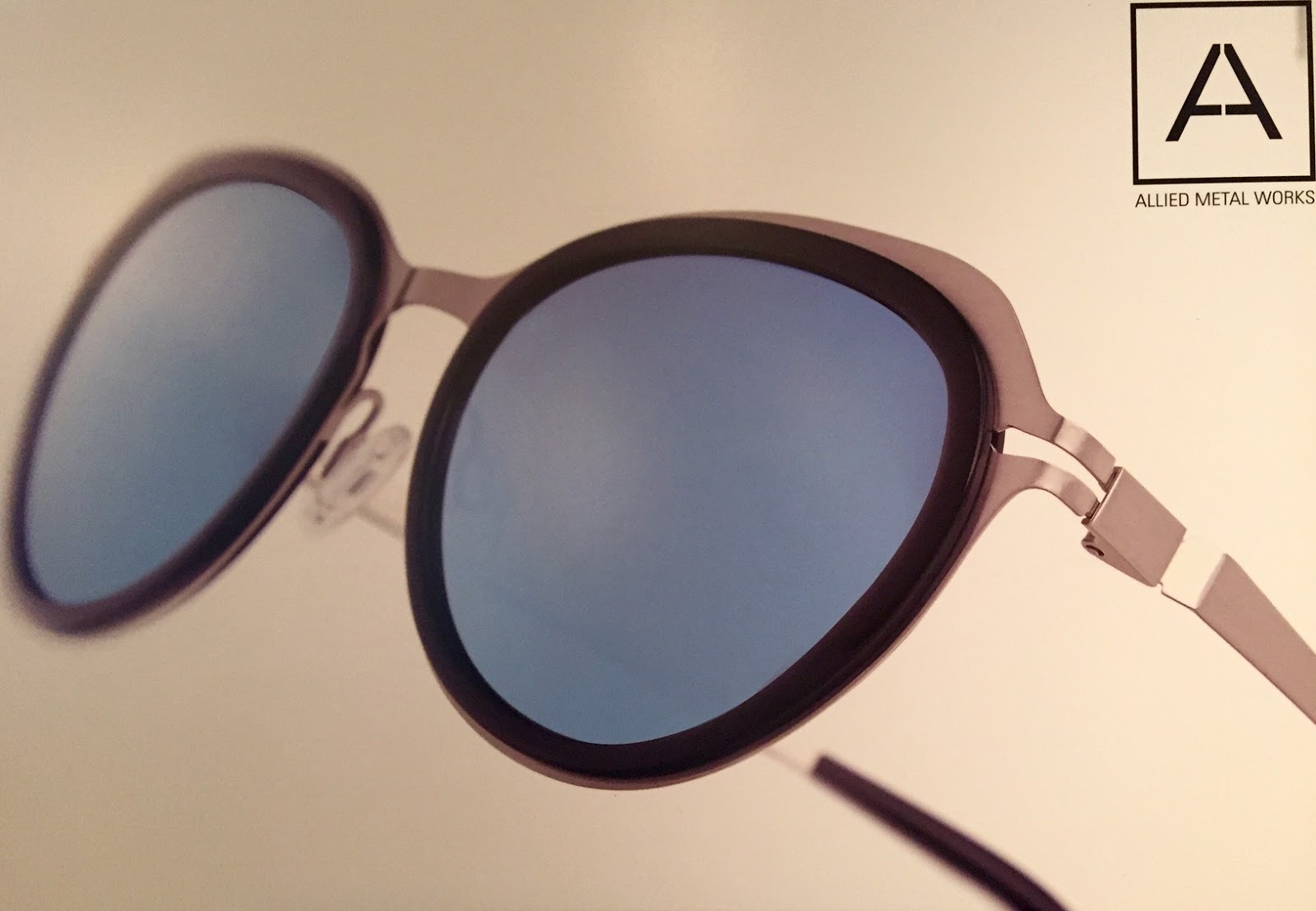
Allied Metal Works is a new company that
we have added to our optical.  This company
 has state-of-the-art engineering for maximum
comfort and durability.  There are no hinge
pins to fall out, titanium makes them extra
light-weight, and they have unique layering
designs incorporating acetate and titanium.


Tuesday, September 2, 2014

Sports-Related Eye Injuries


Sports-Related Eye Injuries

Since September is Sports Eye Injury Prevention Awareness Month, THE DOCS wanted to answer some of your questions about eye injuries caused by participation in sporting events.

1.        My child will be participating in school sports this year.  Do we need to worry about eye injuries?

According to Liberty Sport, more than 600,000 eye injuries related to sports and recreation occur each year.  Of these injuries, 42,000 are of a severity that requires Emergency Room attention.  The highest rate of injury occurs in children between the ages of 5 to 14.  The doctors at Memphis Family Vision & SEE Main Street strongly recommend that patients participating in athletic events wear protective eyewear.

2.        If I wear glasses on a regular basis, will that prevent an eye injury?

Actually, sports participants that wear corrective eyewear or sunwear are at a higher risk of eye injury than participants using no eye protection at all.  The lens could pop out and cut the eye, or the frame itself could cause injury.

3.       What should I look for when purchasing sports eyewear?

The frame you buy should be labeled as protective eyewear for sports use, such as Rec Specs.   The lenses should be polycarbonate lenses at least 2.0 mm thick.  You often see notification that the eyewear is certified ASTM F803 to maximize impact resistance. 

4.        Which sports have the highest risk of eye injury?

According to Liberty Sport, the following sports are considered a high-to-moderate risk of eye injury: Basketball, Baseball, Softball, Lacrosse, Hockey, Tennis, Soccer, Volleyball, Water Polo, Football, Air Rifle, BB Gun, Paintball, Boxing, Martial Arts, Cricket, Squash, Racquetball, Fencing, Badminton, Fishing and Golf.  Please note the chart below that breaks down eye injuries by category and age.

5.       What about Contact Lenses as protection, since the cornea is covered by the lens?

No contact lens, whether hard or soft, can protect against an eye injury.  Impact to the eye can actually cause an increased chance for injury in contact lens wearers because the lens can dislodge or fold over.  Besides, many injuries are caused by blunt trauma, like being hit by a stick or a ball, which won’t be prevented by wearing a contact lens.

6.        If I wear a protective helmet or faceguard, won’t that protect against injury to the eye?

Fingers and sports equipment can still penetrate the opening of the facemask.  In addition, a helmet can be knocked off, which will leave you completely vulnerable to injury.

7.        If I get a minor eye injury, should I be worried?

Seemingly minor eye injuries can actually cause major problems.  You should check with your eye doctor if you or your child has an eye injury.  If the injury causes loss of vision, severe pain or tenderness, or a cut around the eye, you should seek medical attention.


Memphis Family Vision and SEE Main Street have a nice selection of protective sports eyewear, both prescription and non-prescription, in a variety of styles, shapes and colors.